202 Tree Center - Chadds Ford
Chadds Ford, PA
1 option
Beech – Purpurea Tricolor (Fagus sylvatica)
Variety not confirmed
Ask about sizes$750.00
Catalog checked Oct 15, 2026. Confirm availability before visiting.
Fagus spp.
17 nurseries nationwide
Choose a city or ZIP to find nearby growers. Showing nationwide listings until you choose an area.
17 nurseries · 45 matching options
Chadds Ford, PA
1 option
Beech – Purpurea Tricolor (Fagus sylvatica)
Variety not confirmed
$750.00
Catalog checked Oct 15, 2026. Confirm availability before visiting.
Chapel Hill, NC
2 options
One of 2 nursery listings
Fagus grandifolia, American Beech
Variety not confirmed
Call for pricing
Catalog checked Oct 15, 2026. Confirm availability before visiting.
Silverton, OR
14 options
One of 14 nursery listings
Fagus sylvatica ‘Marmorata’ European Beech
Variety not confirmed
Call for pricing
Catalog checked Sep 29, 2026. Confirm availability before visiting.
Enterprise, FL
2 options
One of 2 nursery listings
Fagus Grandifolia " American Beech"
Variety not confirmed
Call for pricing
Catalog checked Oct 15, 2026. Confirm availability before visiting.
Vassalboro, ME
5 options
One of 5 nursery listings
Fagus purpurea - Copper Beech Fagus sylvatica ‘Purpurea’ – Copper Beech
Variety not confirmed
Call for pricing
Catalog checked Oct 15, 2026. Confirm availability before visiting.
McMinnville, TN
2 options
One of 2 nursery listings
Fagus Grandifolia
Variety not confirmed
Call for pricing
Catalog checked Oct 15, 2026. Confirm availability before visiting.
Stanwood, WA
4 options
One of 4 nursery listings
Fagus sylvatica 'Bicolor Srtini' (Biclor Beech)
Variety not confirmed
Call for pricing
Catalog checked Oct 15, 2026. Confirm availability before visiting.
Swanzey, NH
2 options
One of 2 nursery listings
Fagus sylvatica ‘Purple Fountain’ (Weeping Purple Beech)
Variety not confirmed
Call for pricing
Catalog checked Oct 15, 2026. Confirm availability before visiting.
Showing 1–8 of 17 nurseries
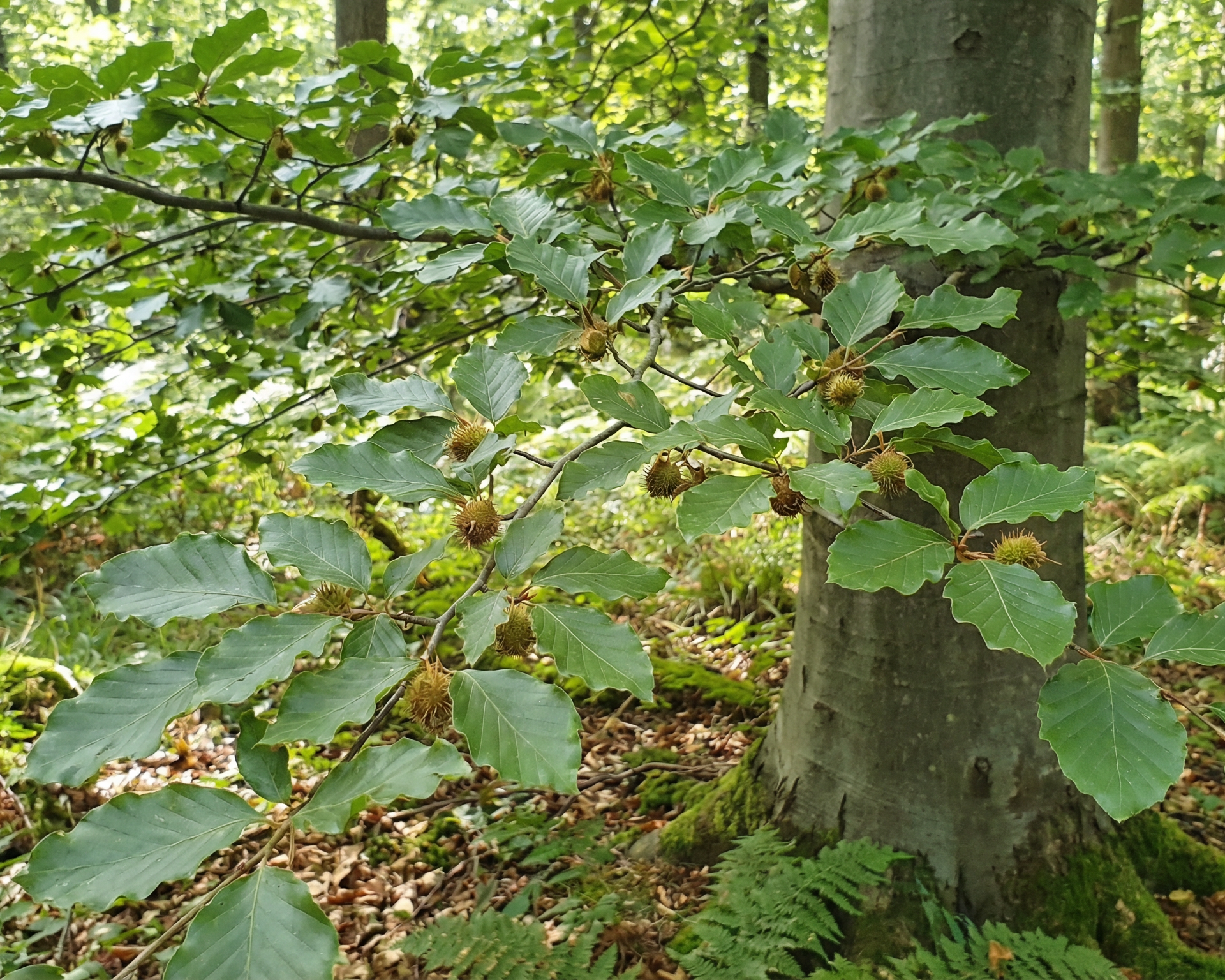
Load more nurseriesBeech, genus Fagus, is a collection of about 10 species of deciduous trees belonging to the Fagaceae family. These trees are native to the temperate and subtropical regions of the Northern Hemisphere. The most well-known species are the American beech (Fagus grandifolia) and the European beech (Fagus sylvatica). Beech trees are recognized for their smooth, gray bark and their dense, spreading canopies, making them popular ornamental trees in parks and large gardens. Beech trees are characterized by their tall, stately appearance, often reaching heights of up to 30 meters (100 feet). Their leaves are simple, alternate, and have toothed margins with parallel veins. In the spring, the trees produce inconspicuous, wind-pollinated flowers, with both male and female flowers on the same tree. The fruit, known as a beechnut, is a small, three-angled nut enclosed in a spiny bur. These nuts are a valuable food source for a variety of wildlife. Beech wood is highly valued for its strength, durability, and attractive grain. It is commonly used in the production of furniture, flooring, cabinetry, and household utensils. The wood is also an excellent fuel source and is used in the smoking of some foods, such as cheeses and meats. In addition to their economic importance, beech trees hold cultural significance in many parts of the world and are often associated with folklore and traditional medicine. Beech trees thrive in well-drained, sandy loam soils and are generally slow-growing, with some individuals living for over 300 years. They have a shallow root system and are sensitive to soil compaction and disturbance. While generally hardy, beech trees are susceptible to a few pests and diseases, including the beech scale insect and various fungal pathogens. Proper care, including adequate watering and mulching, can help maintain the health and longevity of these magnificent trees.